Opinion (mostly), speculation and some facts thrown in.
“Something’s happening at Breedlove” breedloveguitars.com website now begins. Last year Pete Mroz, a former voice contestant, and Shannon Pollard, a businessman, bought Breedlove guitars. At the end of 2025, many guitar models went on sale. Fantastic prices. There are still a few of these deals at Sweetwater.com (perhaps the best online guitar site) and many more at guitarcenter.com and musciansfriend.com.
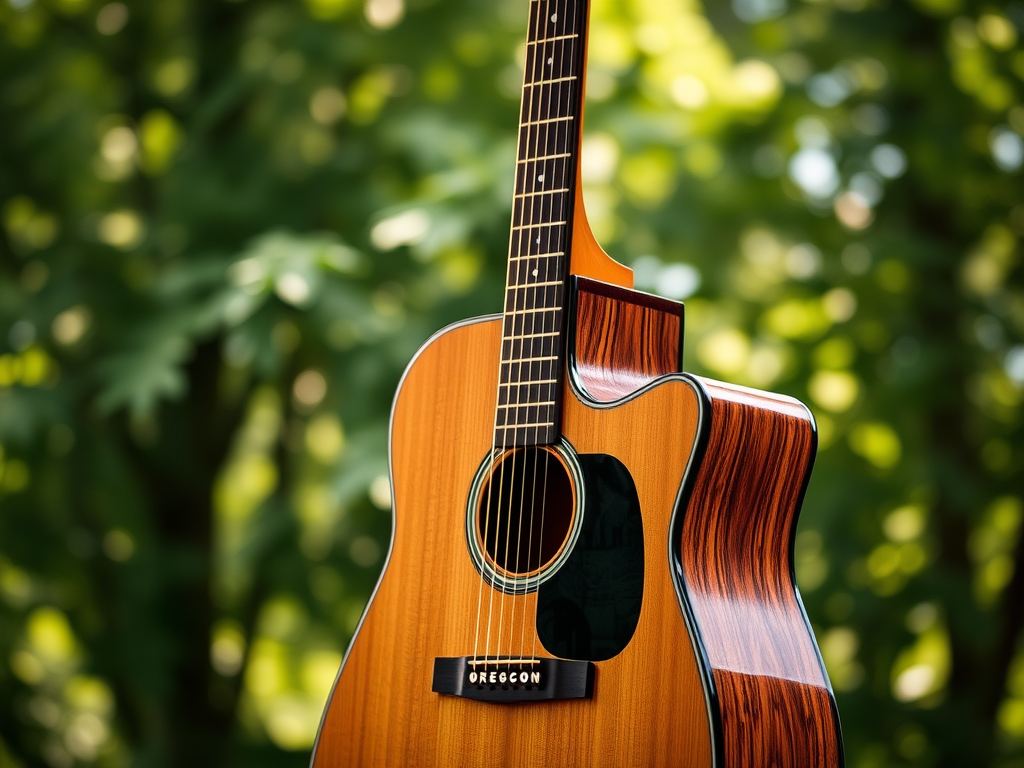
I bought an Oregon series Concert Thinline at Sweetwater because I needed mine shipped in a non-standard way and I knew Sweetwater could accommodate me. They have dedicated sales consultants and they are good at handling unusual requests. While discussing my order, I mentioned that one reason why I’m happy to get this guitar is that the Breedlove website just changed to their “Something’s happening” temporary version and I could be buying one of the last of it’s type.
I was right. A few weeks later, just as NAMN was getting started, new Breedlove guitar models showed up at Sweetwater. A week or two later, they were on other sites, The Oregon series was out. If you want one, buy one now (NOW!).
From the beginning, Breedlove focused on locally sourced, sustainable woods for their guitars. Myrtlewood only grows in the Pacific Northwest region of America and Breedlove is based in Oregon. Typical high end guitars are made with Sitka spruce and Indian rosewood (very high end guitars use Brazilian rosewood). Okay, Sitka spruce comes from the Pacific coast, but it is in high demand from other guitar makers, so using Myrtlewood is almost unique to Breedlove (Taylor tried some, but then developed its urban ash program, pretty cool).
It’s not just the Oregon series. Breedlove prides itself on using sustainable woods for the vast majority of their guitar models including those manufactured oversees. Though altruistic motivations probably guided Breedlove to this business model, it also fits into marketability, and they use it for marketing as well. In economics, its called Market Differentiation. The idea is that in a crowded market (high end acoustic/electric guitars) a differentiated product has a competitive advantage.
Another market differentiation aspect of Breedlove guitars is their “Sound Optimization” process. Although most boutique guitar shops use various forms of custom voicing, Breedlove uses the tap frequency and adjust method. While watching Breedlove’s video of their “sound optimization” video, Chris Alvarado, of Driftwood Guitars, remarked that Breedlove’s process was heads and shoulders above the process most guitar manufacturers employ even though he doubted Breedlove’s claim to using a “scientific” approach.
To explain some of this, Chris Alvarado, who makes several YouTube louthiery videos, often remarks that factory made guitars are made as much to avoid returns and warranty repairs than for sound, at least optimal sound. They tend to make soundboards thinker than they should, and their braces are thicker and taller. Their increased robustness incurs a tonal quality cost. Chris sands his soundboards thinner and shaves his braces to lighten the soundboard, allow it the react more to the strings vibrational energy. He often says that inside every factory made guitar is a great guitar wanting to get out.
Chris’s doubts about the “scientific” claim seems both unfounded and accurate for differing reasons. He and his business partner, Matt Miller, were critical of the Breedlove’s tap technique. They seemed to want more standardization especially in the distance to the microphone. They should know better. The video clearly said they are measuring frequency. An “A” note is 110 hz at six inches, and it’s the same at six feet. Another luthier on YouTube (https://www.youtube.com/@MessengerGuitars) used a similar technique. He found the technique passed to him by Sam Guidry. Basically, tap the wood in four places( tonal nodes), and put the measurements into a set of formulas along with a couple other parameters, and the formulas inform the luthier on the best thickness for the wood.
On the other hand, Breedlove seems to be confusing the application of technology (computer application, microphone, oscilloscope) with science. Later in the video, they (Breedlove employees) said they use the “sound optimization” process to achieve consistency. They target certain frequencies. Although “consistency” and “optimization” have markedly different meanings, Breedlove’s process should not be trivialized. Guitar building is an art. As I noted earlier, another luthier found a formula for tap testing a piece of wood in a handbook. Chris tap’s his wood and listens for several characteristics during his process.
All the same, none of these processes have been shown to produce optimization. Perhaps a piece of wood would benefit from one type of bracing (let’s say “X” bracing) and another piece of wood benefits most from another bracing pattern (lets say “V” bracing. Few tone woods come from trees wide enough to make guitar soundboards. Most often two pieces of wood are glued together. Most luthiers bookmatch the pieces so the grain on each piece meets in the middle and the top and bottom almost mirror each other. Bookmatched soundboards are visually appealing, but an asymmetric soundboard might allow for looser grain near the bass strings and tighter grain near the treble strings. A friend in college build his own guitars and swore that asymmetric soundboards produced a better sound.
Even accomplished luthiers, like Chris Alvarado, build their guitars based on preconceived designs and assumptions. They employ lessons from centuries of guitar making, gathering information from previous generations and passing it to the next. Guitar making is steeped in tradition, but the 20th century saw at least two significant departures. In the early part of the century, cutaway guitars were introduced to give musicians easier access to higher (numbered from the nut to the bridge) frets. Although “f” style soundholes (emulating soundholes in violins and other orchestral stringed instruments) had been around for awhile, especially in archtop style guitars, the latter part of the century saw offset soundholes in the upper bout of acoustic guitars. McPherson guitars are a notable example. Chris Alvarado’s Driftwood Guitars offers a Da Vinci model with the soundhole in the side board and part of the upper bout.
For centuries, master luthiers past along the traditional design, and they instructed apprentices about soundboard importance. For centuries, young guitar builders failed to ask, “If we want the sound board to vibrate as much as we can, why do we weaken it with a soundhole in the middle of the upper bout?” or they accepted lame answers about strings vibrating above the soundhole contribute significantly to the guitars tonal quality, or, and this is my favorite, those who did not accept the lame tradition where kicked out of the workshop and denied access to guitar making tools.
But, back to what’s happening, or seemingly happening at Breedlove. As I was writing this, the new website became available, and the first thing it says is, “We’re planting a flag for tradition. No Compromises. Unapologetically American. Designed and built in our Bend, Oregon Shop. Welcome Home.” We’ll come back to this in a few paragraphs.
Before 2026, Breedlove was a small manufacturer with oversees operations making quality affordable guitars and high quality, “sound optimized” guitars made in Bend, Oregon. Breedlove prided itself on sustainably sourced wood for all of it’s guitars. In particular, they used locally sourced Myrtlewood. I would add, that building pin-less bridges help differentiate their guitars.
In late 2025, Breedlove ceased their oversees production. This dropped them to more of a Boutique status due to decreased production and number of employee’s.
My biggest complaint about their product line was that almost all of their guitars looked like Taylor 414s, but in four different sizes (Concerto, big; Concert, not as big, Concertina, parlor; Companion, travel sized). They did offer a few “square shouldered” (not cutaway) models in their higher end guitars, but if you wanted a non-cutaway, affordable (or semi-affordable) Breedlove, you were out of luck.
In market terms, Breedlove positioned itself as competitors to Taylor guitars, and that ain’t no easy fight.
The new line-up of guitars has only one model (Roots Concert) that looks like a Taylor 14 series. All the rest are square shouldered and look like Martin guitars (Dreadnought, D18, D28; Concert, M18, Shop 18; Parlor, 0 or 0M).
Well, Breedlove kept the pin-less bridges, but this is definitely a step back to more traditional designs. In terms of market strategy, they are now up against Martin, one of the biggest, best known guitar manufacturers in the world producing 130,000 or so guitars a year (Breedlove might make 2000 guitars or so a year). They kept their “sound optimization” which is a good thing.
It’s not a bad market strategy. Mating has grown so large and it is so well known that it can, and many believe it has, put a premium price on their guitars. Chris Alvarado often stated that you pay for the name with Martin and Gibson guitars. Dropping locally sourced Myrtlewood reduces market differentiation, but they are matching Martin tonewood for tonewood in the premium guitar department. Yep, it’s traditional tonewoods versus traditional tonewoods, traditional body shapes versus traditional body shapes (although Martin offers several other traditional body shapes). Breedlove is now price competitive. A Roots series Dreadnought (Sitka Spruce/Rosewood) sells for $3200. A similar Martin D-28 sells for $3500.
For me, in a guitar shop, the pin-less bridge would seal the deal. At home, researching on the internet, Breedlove’s sound optimization process would lead me their way. In truth, three hundred dollars out of three thousand dollars would not sway me. If it were not for the convenience of the pin-less bridge, FUD (fear, uncertainty and doubt) might steer me to the Martin especially if a sound and feel comparison were close.
Breedlove’s real competitors are other boutique brands like Bourgeois Guitars. Breedlove tends to be price competitive in this arena.
I was right. My Myrtlewood (no longer made) Concert Thinline (the thinline is not in the current lineup) may be one of the last of its kind.
 Fact(mostly), Fiction and Opinion